Tuesday, 31 August 2021

The Couplet that saved a life


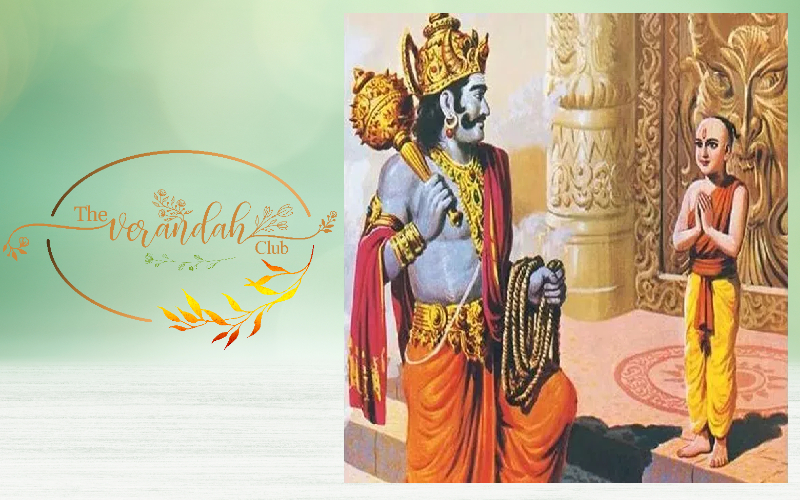
Mahakavi Bharavi is known for his immortal epic ‘Kirataarjuneeyam’. Its main theme is the ferocious fight between Lord Shiva and Arjuna.  Towards the end of the Pandavas’ exile, Arjuna leaves to propitiate Lord Shiva and receive the powerful weapon Pasupata Astra from Him. After a long penance, Arjuna is able to please Shiva. Nevertheless, Shiva wants to test Arjuna’s prowess.  He appears in front of Arjuna in the form of a Kirata (a tribal from a mountain) and creates an opportunity to fight with him. Arjuna brings out all his skill to defeat the Kirata, which is not easy. The thoroughly impressed Shiva appears in front of Arjuna in His true form and presents the Astra to Arjuna.

The above couplet appears in the course of this story, before Arjuna leaves for his penance.


Very little authentic information is available about this great poet ‘Bharavi’ , whose name means ‘lustre of the Sun’. However, certain facts are accepted as probably true. His original name was Damodara and he seems to have flourished during the reigns of the King Durvinita of the Western Ganga dynasty and King Simhavishnu of the Pallava dynasty.

Bharavi’s poetry is characterized by its intricate styles and lofty expressions. If Kalidasa is famous for his similes, (‘Upama Kalidasasya’ )Bharavi is celebrated  for his ‘weight of meaning’ (arthagauravam). (उपमा कालिदासस्य भारवेरर्थगौरवम् )


There is an interesting story about the shloka Sahasaa Vidadheeta na kriyaam’ that appears in Kirataarjuneeyam.


The shloka goes like this.


'सहसा विदधीत क्रियाम्
अविवेकाः परमापदाम् पदम।
व्रुणुते हि विम्रुश्य कारिणम्
गुणलुब्धाः स्वयमेव सम्पदाः॥'


Sahasaa Vidadheeta na kriyaam|

Avivekaa: parama aapadaam padam |

Vrunute hi vimrushya kaarinam |

Gunalubdhaa: svayameva sampadaa:||


(It means – Do not do anything in haste. Thoughtless action will lead to great danger. Wealth likes only those who act sensibly and will come to them willingly.)


And now, the story –––


A Brahmin named Mahadeva lived on the banks of River Godavari. His eldest son Bharavi was blessed with an extraordinary memory power and could compose poems effortlessly.  His popularity grew day by day and his fame started spreading far and wide.


But there was one person, who did not care for his abilities. It was none other than his own father. He never appreciated his son. Whenever Bharavi showed his father some trophy he had won, his father would only say, “How childish! What is so great about it? Go and mind your business.”


Bharavi was very upset about his father’s attitude. Bharavi longed for one word of praise from his father. But his father continued to insult and belittle him.


As he grew older, Bharavi’s sorrow turned into anger. One day, his father went too far in disparaging  Bharavi.  The son could bear it no longer. He decided to kill his father. Bharavi got a heavy club to beat his father with. As he tried to open the door of his house with the club in hand, he heard his mother say something to his father. He paused, looked through the keyhole and listened.


His mother was telling his father, “Why do you hurt our son Bharavi like this? Poor boy! He is longing for some recognition from you. You are consistently insulting him. This is not the way to treat a grown up young man.”


His father laughed and replied, “Alas! Even you have not understood me.  I am extremely proud of our son Bharavi. But I do not praise him because, too much of praise will make one arrogant. Once a person becomes arrogant, he will make no progress. Worse, he will start deteriorating. Our Bharavi has a great future. One day, the whole world will celebrate him. I am waiting to see that day.”


Hearing these words, the club slipped from Bharavi’s hand. Tears rolled down his cheeks. He knocked at the door and entered the house. He fell at the feet of his father and cried, “Father! I am a great sinner. I was also stupid.  I could not understand your good heart. I actually came here to kill you with a club. I just happened to overhear the conversation between you and Amma. If I had not heard that, I would have killed you by now. Please give me a suitable punishment.”


His father raised him with great affection. “Get up, my child! This is not your mistake alone. I too have exceeded my limit in insulting you. Forget it. Now you have realized your mistake. That is enough. You do not need any punishment.”


But Bharavi did not agree.


He said, “If you do not give me the punishment I deserve, I will not be at peace. Please do not show any mercy towards me. I will do anything you tell. What should I do?”


 His father Mahadev thought for a while and said, “Yes; what you are telling is also correct. Punishment will cleanse you and purify you. Take your wife and go to your father in law’s house. Be there till I call you back. ”


This peculiar punishment surprised Bharavi. ‘Life at the father in law’s house will be comfortable and enjoyable. One will get a lot of love and respect there. How can it be a punishment?’


But he did not argue with his father. He took his wife Janaki and left for his father in law’s house.


Bharavi’s father in law was a great scholar, too. He had two more sons besides his daughter, who was Bharavi’s wife. The sons lived with the father as a joint family. They had some land and were leading a reasonably comfortable life.


Seeing Bharavi and Janaki, they welcomed them with great joy. Narrating the whole story, Bharavi informed them that he would be staying with them till his father called him back.  The father in law’s face changed after hearing this. He said curtly, “Okay; get inside.”


Bharavi had a totally different experience at the father in law’s house, this time. All the work had to be done by his wife. He had to take care of the outside work. Nobody invited them for meals. They had to go and eat if they felt hungry. On festive occasions, the other members bought new clothes for themselves, but did not include Bharavi or Janaki in anything. Life was miserable. Bharavi was longing to go back to his house.


Despite all this, Bharavi’s ability to write poetry became more and more refined.


One day, Janaki came to him and told him with great excitement, “ I have a friend who is very wealthy. She is fond of poetry. Please compose a good poem for her. She will pay me well for that. Our position in this house may improve if we give them some money.”


“Oh! Really? Who is she? You have never mentioned her before.”


“I met her recently after many years.   Hers is a strange story. Her husband left home when her son was seven years old, in order to expand his business. He did not return after that. Many years have passed. My friend’s attempts to trace him were futile. Finally, she took over the family business. Her business has flourished. She has become quite rich. She has remodeled her old house beautifully. Her son has also grown up and is helping her in her business. She does a lot of charitable work and is hoping that someday her husband will come back.”


Bharavi immediately wrote a couplet and gave it to his wife. (This couplet is given above with the meaning.) “This couplet will find a place in the epic I am planning to compose. Your friend will be the first one to see this couplet. Give it to her with my regards.”


Janaki was very happy. She gave the couplet to her friend. Her friend was overjoyed and gave Janaki a lot of gifts.

Janaki’s friend was so impressed with the couplet that she got it written on a silk cloth and hung it at her bed room’s entrance . She wanted to see it every day and remember what it said.


In the mean time, her husband had made good progress in his business.  After eleven years, he decided to go back to his family and spend the rest of his life with them. As he rode on his horse, cartloads of silk, jewels and expensive gifts followed.


It was a full moon day. The moon had covered the whole world with its silver light. The merchant left the carts outside the city and rode into the city by himself. The sight of the familiar streets and houses filled him with joy. He came to the place where his house used to be. It was not there. A huge mansion stood in its place. He became worried. Slowly, he dismounted the horse and knocked at the door with hesitation.


The old servant who came to open the door recognized him and was about to shout in joy. The merchant asked him to be silent and moved slowly towards the bedroom. The windows were open. His wife was sleeping peacefully. She had become more beautiful with age.


But, who is that good looking young man, who was sleeping next to her?


The merchant was filled with rage. He wanted to kill the young man who dared to sleep next to his wife. He drew his sword and tried to enter the bedroom.


At that time, his eyes stopped at the silk cloth with a couplet written on it. The beauty of the words and their depth of meaning impressed him so much that he read it again and again.


The couplet said, “Never do anything in haste. A hasty mind is the abode of all dangers. One who thinks and acts will always be prosperous.”


These words went straight to his heart. He slowed down and knocked at the door. His wife opened the door and shrieked in joy. The next minute she noticed the suspicion and anger in his eyes. She woke up the young man. “Get up, son! Your father has come.”


When the merchant knew that the young man was his own son, he was overjoyed. As he embraced him, he shuddered to think what would have happened if he had not read the couplet.


The next day, he invited Bharavi and his wife home, fell at their feet and gave them a lot of gold and other gifts.


This news spread fast and Bharavi became even more famous. His father also heard about it. He felt very happy and invited him and his wife back home.


Bharavi composed many great poems after that. His ‘Kirataarjuneeyam’ in which the couplet found a place, is considered to be the best of his creations.


References:

https://www.freepressjournal.in/latest-news/bharavi-the-great-sanskrit-poet https://www.indianetzone.com/67/sanskrit_litterateurs.htm

https://vichaarsankalan.wordpress.com/2010/08/26


Gargi Vachaknavi and Yajnyavalkya


Gargi Vachaknavi (born around c. 700 BCE), daughter of Rishi Vachaknu was an ancient Indian philosopher and one of the nine gems in the court of Mithila’s king Janaka. She was known as Gargi because she came in the lineage of Rishi Garga. Her last name comes from her father Vachaknu. In Vedic literature, Gargi is honoured as a great natural philosopher and an expounder of the Vedas.  She was also referred to as a Brahmavadini (One who understood the Brahman and could talk about it). She remained unmarried and spent all her life in the quest of the Brahman. Gargi composed several hymns in Rigveda that questioned the origin of all existence. Yoga Yajnavalkya, a classical text on Yoga is a dialogue between Gargi and Sage Yajnavalkya. The Brihadarayaka Upanishad gives a detailed account of this dialogue.

Janaka, the king of Mithila was a great scholar and was very much interested in philosophical debates. He would organise conferences at frequent intervals and thus create opportunities for the learned ones to exhibit and exchange their deep knowledge.


Once, Janaka performed an elaborate yajna (sacrifice). A lot of sages and scholars were present. Gargi also attended. King Janaka was quite impressed by the vast assembly of scholars. After the yajna,  he announced–– “O Wise scholars! I wish to gift a thousand cows with their horns tied with gold coins to the one, who is acknowledged as the best philosopher among you. The one, who is confident, can come forward and claim the gift. However, he should be able to convince the others that he deserves this gift.”


For some time, there was absolute silence. Then Yajnavalkya, the court philosopher stood up, called one of his disciples and asked him to drive the cows to his ashram. Those who were sitting quietly till then, not having the confidence to claim the gift, started to object.

“How can you claim that you are the best?”

Yajnavalkya said, “I am not saying I am the best. The cows will be useful to me. The students in my ashram need the cows’ milk. However, if any of you wish to examine me, please go ahead. Ask your questions.”

A few of them asked him profound questions about the Brahman and Yajnyavalkya gave them convincing replies. When all kept quiet, Gargi Vachaknavi, the only woman philosopher in the whole group of scholarly men, stood up and asked Yajnyavalkya a few questions.

(The conversation between Gargi and Yajnyavalkya fills us with amazement with its depth and utter honesty. That a woman could question the scholar of Yajnyavalkya’s calibre and that he answered her with so much clarity and patience, are rare to find even in these days of feminine equality. A small part of the conversation is given below.)

Gargi: Maharshi Yajnyavalkya! It is believed that brahmacharyam is absolutely essential for realizing the Self. You are twice-married. (Yajnyavalkya had two wives – Katyayini and Maitreyi) Don’t you think you are setting a bad precedent?”

Yajnyavalkya: Tell me, Gargi, who is a brahmachari?

Gargi: One who is immersed in the quest of the Absolute truth. (Etymologically, the word means this. However, we generally use it to refer to a celibate.)

Yajnyavalkya: Why do you think a householder cannot seek the Absolute Truth?

Gargi: Only a person, who is free, can seek the Truth. Marriage is bondage.

Yajnyavalkya: Marriage is bondage?

Gargi: Without any doubt.

Yajnyavalkya: How?

Gargi: Maharshi! A married person has to take care of others. He is involved in many things. If he has children, the responsibilities increase. In this situation, where is the freedom to seek the Truth?

Yajnyavalkya : Does one take care of others because of love or bondage?

Gargi: Love is also a bondage, Maharshi!

Yajnyavalkya: No, Gargi! True love emancipates. When love is selfish, it becomes bondage. The problem is not with love; it is with selfishness.

Gargi: Love is always selfish, Maharshi!

Yajnyavalkya: When desire is blended with love, love turns selfish. Such a love is certainly bondage. But that love, which knows only to give and does not expect anything, can never be bondage. It emancipates.

Gargi: What you are saying is quite impressive, Maharshi! But, can you give examples to prove your point?

Yajnyavalkya: Look around you, Gargi! The sun embraces the earth with his rays. When his light falls on the earth, lives are born. The earth does not expect anything from the sun. She only knows to bloom when the sunlight touches her. The sun also does not try to establish his right over the earth. He burns himself and gives life to the beings on the earth. This is selfless love. We are all born out of such selfless love. How can love be an obstacle in the path of a seeker?

Gargi was quite satisfied with this reply. Still, she had other questions regarding the true nature of things.

Gargi wanted to know what the elements such as the earth, water, fire, air and sky are made of. She demanded specific replies and Yajnyavalkya answered all her questions elaborately and convincingly. However, when Gargi wanted to know what was the Brahman made of, Yajnyavalkya asked her to stop asking questions as any further discussion would only disturb her mental balance. Surprisingly, Gargi agreed. With great satisfaction, she declared Yajnyavalkya to be the greatest ‘Brahmajnani’ (knower of the Brahman) and the whole court cheered him.

We will learn more about this great rishi in the sequel Yajnyavalkya and Maitreyi.

Sources:

https://en.wikipedia.org/wiki/Gargi_Vachaknavi


https://www.youtube.com/watch?v=wZ7chItUqrY

https://www.jagran.com/blogs/rajanidurgesh


B. Ramadevi


(Sathya Kama Jabala)


 (Sathya Kama Jabala)


A poor woman called Jabala stayed in a small hut with her son Sathya Kama. She had named her son so because of her strong faith in being truthful. (

‘Sathya Kama’, meant–– the one who loves the truth).

When he was about eight years old, he came to his mother and said,

“Mother! I want to learn Brahmavidya from a suitable guru.”


Jabala became very happy. She knew she would have to be separated from her son. But she would do anything to make her son happy.

She said, “My child! I am very happy. Find a guru and obey him implicitly. Whatever happens, tell only the truth.”

Jabala fell at her feet, took her blessings and walked in search of a guru.


Those days, teachers taught students in their hermitages. The students had to stay with the gurus and obey their instructions. Their gurus taught them what they thought was suitable for them.

Sathyakama walked for many days and came to the hermitage of a sage named Haridrumata Gautama. He prostrated before him and requested politely, “Master! I want to learn Brahmavidya. Kindly accept me as your disciple.”


Goutama welcomed him and asked him the usual question, “Child! What is your gothra? What is your father’s name?”


Sathyakama replied, “ Master! My mother’s name is Jabala. When I asked her about my father, she said, “I have worked in many places. I am not sure as to who is your father.”


Though this reply surprised the guru, he was also immensely pleased with Sathyakama’s honesty. He said, “Sathyakama! You are able to tell the truth without any hesitation. You certainly have the right to learn Brahmavidya. I will take you as my disciple. You will be known as ‘Sathyakama Jabala’ from today.”


He took him inside the hermitage and from the next day, started teaching him how to meditate. Sathyakama learnt with great interest and started practicing meditation sincerely.


After a few days, the guru called him and said, “Look, Sathyakama! Here are 400 cows. Take them to the jungle and stay there. They will get enough grass there and you can manage with the fruits and tubers available there.  When they multiply to 1000, bring them back to me.”


The cows were old and weak. But Sathyakama did not question his guru. He took his guru’s blessings and moved to the forest driving the herd of cattle with him.


For a few days, life was difficult. But slowly, he got used to that life. He had nobody to talk to except the trees, birds, insects and his herd of cows. He spent most of the time meditating. He found an inexplicable peace inside him. He did not notice the passage of time. Hours passed into days, days to months and months to years. He lost the count of time. The pregnant cows gave birth to calves and the calves grew to young cows and bulls. They flourished in the verdant forest that had rich greenery. The herd grew in size but Sathyakama did not even bother to count their number. He was quite happy with his meditation.

One day, a fully grown bull came near him and spoke to him in human voice.

“Sathyakama! Our number has reached a thousand now. Please take us to your guru’s ashram. Before that, I will teach you one part of the Brahmavidya. Know this! The Brahmam is that which pervades everywhere. It spreads its brilliance from the east to the west and from the north to the south. Agni will teach you another portion of the Brahmavidya.”


Sathyakama offered his respects to the Bull and accepted its ‘upadesha’. The next day, he started driving his herd back towards his guru’s ashram. In the evening, he stopped at a place and lit a fire to fight the piercing cold. The cows and bulls stood around him.

As the flames burst high, Agni appeared before him. He said, “ Sathyakama! I will teach you another part of the Brahmavidya. This earth, this atmosphere, the sky, the ocean ––– all are the Brahmam. The Brahmam is limitless and endless. You will receive your next lesson from a swan.” And, Agni disappeared.


The next day, Sathyakama began walking with his herd, and stopped at a place in the evening for rest. That day also, he lit the fire and sat near it for warmth. Suddenly, from nowhere, a lovely swan came, flying. It landed near Sathyakama and began to talk.


“Sathya kama! The Brahmam is the Sun. The Brahmam is the Moon. The Brahmam is the light of life. Understand this.” A water fowl will teach you the final portion, tomorrow.” Saying this, the swan flew away.


The next evening, as Sathyakama stopped to take rest along with his herd and lit the fire, a colourful bird flew by and sat in front of him.

“Sathyakama! I have come to teach you the final part of Brahmavidya. The Brahmam is our breath. The Brahmam is our sight. The Brahmam is our ability to hear. The Brahmam is our mind. Brahmam has its abode in all these things. In fact, it resides in everything. Remember this.” And, the bird flew away.


And then, Sathyakama drove his herd to his guru’s hermitage. Guru Haridrumata Gautama was very happy to see his disciple after a long time with a large herd of healthy cows and bulls. 


From the glow on the face of Sathyakama, the guru understood that his disciple had already learnt what he came to learn.


Giving him a hearty welcome, Gauthama said, “Son! I can see peace emanating from your face. A blissful smile adorns your face. Your mind seems relaxed and your vision is sharp. I am sure your have already received Brahmavidya.”


Sathyakama prostrated before his guru and said, “Master! I want to learn Brahmavidya through you, too. Please teach me.”


The guru was very impressed with Sathyakama’s humility. He said, “Sure, my child!” Then he taught everything about Brahman in detail that included all that was taught by the Bull, the Agnidev, the swan and the colourful bird. He continued. “The one who knows oneself is the knower of the Brahmam. You are limitless. You are resplendent. You are all-pervading. Realising this is acquiring Brahmavidya. You have acquired it.'


The guru blessed Sathyakama wholeheartedly.


Later, Sathyakama Jabala became a very famous sage and helped many disciples to attain true knowledge.


 (The details about Sathyakama Jabala are found in Chhaandhogya Upanishad. His life is proof for the fact that when a person is truthful and dedicated, what he wants, comes to him.)

––– B. Ramadevi


Ashtaavakra, the boy with eight bends in his body


(Ashtaavakrawas a great sage and a celebrated character in the Indian epics and puranas. His work, ‘Ashtaavakra Gita’ contains the conversations between Ashtaavakra and King Janaka. It is considered to contain the essence of Advaita Vedanta.The work was appreciated and quoted by great saints and scholars.

Kahola(Kahoda in some texts) a disciple of Sage UdhalakaAruni, marriedUdhalaka’s daughter Sujatha and set up his own ashram, after completing his studies.  He had many disciples and life went on smoothly. When Sujatha became pregnant, their joy was complete.

Oneday, Kaholawas practising some of the verses he would teach the following day. HisSujathawas also sitting there. Suddenly, the foetus from inside Sujatha’s womb spoke, “Father! Please stop practising. You have made eight errors. Please go back to your Guru and learn your lessons again.” Kahola was shocked and infuriated. Without thinking, he cursed the baby inside his wife’s womb to be born with eight bends (eight deformities). He regretted the curse immediately, but it was too late.

As time went by, the rains failed. Due to the dearth of food and water, the disciples left Kahola’sashram.Sujatha suggested that he should go to King Janaka’s court in Mithila,participate in the intellectual debate conducted there  and bring back rich rewards. Kahola left for Mithila.

In Janaka’s court, there was a scholar named Vandin, who had made it a habit to defeat those who came to debate with him and later, immerse them in the sea. Kahola, who went with the hope of winning rich gifts, unfortunately was defeated by Vandinand met with the same fate.

In due course, a son was born to Sujatha with eight bends in his body and people began to call him ‘Ashtavakra’-- the one with eight bends. But Uddhalaka named his grandson, Ashtaavakra(Ashta+Avakra) i.e., not crooked, but straightforward in his thought process. True to his grandfather’s prediction, Ashtaavakrawas growing into an incredibly bright boy.

In the meantime, the news of what happened to Kahola in Janaka’s court reached Udhalaka’sears.He did not want his grandson’s education to be affected by the shadow of a father who failed. So, he instructed Sujatha to hide this information from her son. In the meantime, Udhalaka’s wife gave birth to Svethaketu. Both children grew up together.

Ashtaavakrawas under the impression thatUdhalaka was his father and Svetaketu, his brother. One day, as Ashtaavakrasat on Udhalaka’s lap, Svetaketu became jealous and asked him to get down from his father’s lap and go and sit on his own father’s lap. It was then that Ashtaavakra knew about his real father and what had happened to him.

He was almost ten years old by then. He decided to go to Mithila immediately and defeat the scholar who had defeated his father. Svetaketu, who was apologetic for his behaviour also went with him.

When these two boys tried to enter the court, the gatekeepers stopped them saying only grown up scholars could go in. Ashtaavakra replied that a grown up person need not be old; he should be wise. The impressed gatekeepers let them in.

Janaka’s court was filled with scholars. They burst out laughing when they saw Ashtaavakra. He also laughted back -- only, louder. When King Janaka wanted to know why he was laughing, he replied, “What kind of intellectual discussion can happenhere, when your scholars can judge only the outward appearance of a person? I am really amused.”

The king apologised for their behaviour and wanted to know the purpose of their visit.

Ashtaavakra introduced himself as the son of Kahola and requested to be permitted to conduct a debate with Vandin. The king agreed. The debate started.

For some time, both the participants seemed equally poised. After debating on many serious topics, Vandin and Ashtaavakraalternately composed verses on the numbers one to twelve. Vandin could only compose the first half of a verse on the number thirteen. Ashtaavakracompleted the verse and thus defeated Vandin.

King Janakawas so impressed withAshtaavakrathat he became his disciple.

Vandin revealed that he was the son of Varuṇa and hadsubmerged Kahola along with several other brahmiṇs in water to help his father carry out the twelve-year long, ‘VarunaYajna’. He brought Kahola back and handed him over to Ashtaavakra with due respect.

Ashtaavakra, Svetaketu and Kahola left the court and walked towards their guru’s ashram.Kahola was grateful to his son for emancipating him and withdrew his curse. On their way back home, Kahola asked Aṣṭaavakra to bathe in the river Samangaa. Aṣṭaavakra did so. When he got up, his deformities were cured and he turned into a handsome boy. Sujata was very happy to see her husband and her no-longer handicapped son. Aṣṭaavakra stayed a lifelong Brahmachari and became a great rishi. 

B. Ramadevi

References:

https://en.wikipedia.org/wiki/Ashtavakra_(epic)

https://en.wikipedia.org/wiki/Ashtavakra_Gita


Thursday, 11 March 2021


Hero Story

B. Ramadevi


Nachiketa


Swami Vivekananda once said: "If I get ten or twelve boys with the faith of Nachiketa, I can turn the thoughts and pursuits of this country into a new channel.”

What made Swami Vivekananda say so? Who was Nachiketa? How and why did he impress the Swamiji so?

Read on…

Rishi Uddalaka had two sons. One was Shvetaketu and the other was Nachiketa. Shvetaketu was brilliant and his father sent him to a gurukula for gaining more knowledge. But Nachiketa, being an introvert, never showed any interest in anything. He hardly spoke and never demanded anything. But he was a great thinker and was growing internally. But his father considered him useless and kept him at home. 

Once, Rishi Uddalaka performed a yajna named ‘Vishvajit’ to gain enough merit to reach heaven when he died. After the yajna was over, he started donating his cows. 

It is difficult to understand why great people at times behave like ignorant ones. Rishi Uddalaka had performed many yajnas and had won the honor of being called ‘Vajashravas’ (meaning –– the one, famous for donations). That day, he donated the good cows to his relatives and friends but gave away the barren and weak cows to poor Brahmins. There was absolutely no use of those cows and Uddalaka would only earn demerits by donating them. 

Nachiketa, the so called ‘good for nothing’ son, noticed this. He loved his father and was sad that his father was committing a sin by donating those cows. He went to him and asked, “Father! Is it not wrong to donate these barren cows? Are we not supposed to give only the good things to people?”

Rishi Uddalaka did not like this question. He did not give a reply. Then Nachiketa asked him, “Father! To whom are you going to give me?” Uddalaka chose to ignore his son’s question. But Nachiketa was persistent. When he repeated the question for the third time, the already irritated father shouted in anger, “I am giving you to Death”.

Nachiketa did not expect this. However, he collected himself and said, “All right, father! So be it.”

The father immediately realized his mistake and pleaded with his son. “I am sorry, my boy. I did not mean it. You don’t have to go to Yama.”

But Nachiketa said, “Father! I have always obeyed you. Your word is law to me. You should not take back your promise because of me.”

Then Nachiketa took leave of his father and set out towards Yamaloka. With great difficulty, he reached Yamaloka. But Yamaraj was not there. Nachiketa sat at the gates of his palace for three days till Yamaraj returned. 

Yamaraj was surprised to see a little boy at his gates with a tired but glowing face. When he learnt that he had been waiting there for three days without food or water, he was filled with remorse. 

Yamaraj apologized to Nachiketa and told him, “Son! I am sorry to have kept you waiting for three days without offering hospitality. I will give you three boons. Ask what you want.”

Nachiketa said, “Thank you, my lord! I want my father to forgive me and accept me when I go back to him.” Yamaraj said, “So be it! What do you want as your second boon?”

“My lord! Please teach me the techniques of fire sacrifice that will help me attain heaven.”

This was a little unexpected from a small boy. But Yama was pleased and taught him patiently all the mantras and rituals needed for the fire sacrifice. Nachiketa learnt it with great eagerness. Yamaraj said, “You are a great learner, Nachiketa! From today, the yajna made with Agni will be called ‘Nachiketagni yajna’ in your honor. I am also giving this necklace, studded with gems of different shapes, as my gift to you.” 

Nachiketa thanked him and asked for his third boon. “My lord! I want to know the mystery behind death. What happens to the soul of a person when he dies?”

Yamaraj was stunned. He tried to evade that question. “Nachiketa! Even the celestials have not been able to understand this very well. It is very subtle and inexplicable. You will not be able to understand this. Please ask for another boon.”

Nachiketa said, “My lord! If that knowledge is so subtle, who else can teach me about the mystery of death better than you, the lord of Death? I want only this boon.” 

Then Yamaraj tried to tempt Nachiketa with wonderful boons (there is an exceptionally long list) that will ensure his long and comfortable life in the earth. But Nachiketa was firm.

“O Lord! All the joys that you are ready to offer me are temporary, aren’t they? They diminish man’s strength and will certainly come to an end, one day. Wealth can never satisfy man. Keep all these with you. Do not try to buy me with these things. I do not want any of these. I want the knowledge of the Atman.”

Yamaraj was immensely pleased with Nachiketa’s strength of mind. He started teaching him Atmavidya.

“My boy! Man is attracted by good and bad things. An intelligent person chooses the path that will uplift him. The foolish one chooses the path of enjoyment and, is doomed. You have wisely chosen the correct path. No amount of temptation could make you swerve from your determination. Very rarely a teacher gets a student like you.

Now listen! By meditating on the Paramatma who resides in the hearts of the devoted, a person is freed from the bonds of enjoyment and suffering. Such a person has got the source of bliss and is eternally blissful. 

I will teach you the significance of the letter ‘Ohm’ (ॐ). This letter is the final goal. The one who knows this and understands this, can have all his desires fulfilled. He also becomes one with the Brahman. 

The atman is never born and never dies. It can neither kill nor get killed. It is smaller than the smallest and bigger than the biggest. It resides in the heart of every being in this creation. By having this knowledge, an intelligent person never grieves over anything. This knowledge cannot be achieved with education or effort. A person whose mind is at peace can achieve this. 

The human body is like a chariot. The owner of this chariot is the Atman. The charioteer is the intellect. And mind acts as the reins that control the horses. The five senses are the horses that pull the chariot. Those who do not have control over their minds let their senses wander where they please and they take the body away from its aim. Those who have their minds under control do not let their senses go astray. They reach the abode of the Paramatma and are freed from the cycle of birth and death. There is nothing greater than the Paramatma and He is the final goal of the Atman. 

Nachiketa! Arise! Awake! Understand the boons that you have received and make use of them.”

With these words, Yamaraj bade Nachiketa farewell. And Nachiketa returned to his father’s home as a ‘Jeevan mukta’.


Note:

There are references to Nachiketa in the Rigveda, Taittiriya Brahmana, and  in the Mahabharata. However, the primary story, dealing with the dialogue between Nachiketa and Yama, comes from Kathopanishad (कठोपनिषद्).

Sources:

http://www.dnaofhinduism.com/ancient-wisdom-via-stories/story-of-nachiketa-yama-the-soul-brahman 

https://vivekavani.com/swami-vivekananda-quotes-katha-upanishad-nachiketa/

https://www.youtube.com/watch?v=_qSchdy5j_w

https://www.youtube.com/watch?v=XdH-GOnCVI0

https://www.youtube.com/watch?v=_HnyxQvZ3A0


B. Ramadevi is a teacher of English and a freelance reviewer of music and dance. Being a polyglot, she gets inputs from various sources and loves to share them with interested people. She contributes articles for Verandah Club on characters from Indian scriptures and classics. 


Saturday, 6 March 2021

வால்மீகி ராமாயணத்தேன் துளிகள்

ராமாயணத்திலும் மகாபாரதத்திலும் நம்மில் பலர் அறியாத செய்திகள் நிறைய உள்ளன. அவை மிகவும் சுவையானவை மட்டும் அல்ல. மனித மனத்தின் ஆழங்களை மிக அழகாக விளக்குவதாகவும் அமைந்துள்ளன.

சமீபத்தில் மறைந்த பன்னாஞ்சே ( Bannanje Govindacharya ) கோவிந்தாச்சார்யா என்பவரது 'வால்மீகி ராமாயண சிந்தனெ' என்னும் கன்னட உபந்நியாசம் கேட்கும் வாய்ப்பு கிடைத்தது. மிகப்பெரிய கல்விமானாகிய அவர் பேச்சுக்களைக் கேட்கும் போது Oliver Goldsmith என்னும் கவிஞர் 'The village schoolmaster' என்ற கவிதையில் சொன்னது தான் நினைவுக்கு வருகிறது,

"And still they gaz’d, and still the wonder grew,

That one small head could carry all he knew.”

அவர் கூறிய அனேக சுவையான செய்திகளில் இருந்து சிலவற்றை இங்கு பகிர்கிறேன்.

நாமெல்லாம் தசரதன் கைகேயிக்கு இரண்டு வரங்கள்  கொடுத்திருந்தான் என்று அறிந்திருக்கிறோம். ஆனால், அவன் அதற்கு முன்னமே, கைகேயியின் தந்தைக்கு ஒரு வாக்கு கொடுத்திருக்கிறான். முதல் பட்டத்தரசியான கௌசல்யாவுக்கு குழந்தைகள் பிறக்கவில்லை என்பதனால் இன்னொரு திருமணம் செய்து கொள்ள விரும்பி கேகய தேசத்து இளவரசியான கைகேயியை மணம் பேச அங்கு செல்கிறான்.

(கேகயம் எம்பது ஆஃகானிஸ்தான் என்கிறார் கோவிந்தாச்சார்யா அவர்கள். கௌசல்யா, கோசல தேசத்து இளவரசி. ஆகவே கௌசல்யா என்று குறிப்பிடப்படுகிறாள். கேகய தேசத்து இளவரசி கைகேயி என்று குறிப்பிடப்படுகிறாள். அவர்களுக்குத்தனிப்பட்ட பெயர்கள் இருந்தனவா என்றே தெரியவில்லை. மூன்றாவதாக மணம் செய்து கொண்ட சுமித்திரை இளவரசி அல்ல. ஆகவே அவளுக்குத் தனிப்பட்ட பெயர் உண்டு.)

திருமணப் பேச்சுவார்த்தையின் போது, மகாபாரதத்தில் சத்யவதியின் தந்தையார் போட்ட நிபந்தனையையே கைகேயியின் தந்தையும் போடுகிறார்.  வெகு காலமாக குழந்தைகள் இல்லாததால், இனி பிறக்காது என்ற எண்ணமா, இல்லை, பிறந்தாலும் கௌசல்யாவுக்குப் பிறக்காது என்ற எண்ணமா, இல்லை, கைகேயியின் பேரழகில் ஏற்பட்ட மயக்கமா—ஏதோவொன்றோ, எல்லாமுமாகவோ சேர்ந்து, கைகேயிக்குப் பிறக்கும் மகனே நாட்டை ஆளுவான் என்று வாக்குக்கொடுத்து அவளைத் திருமணம் செய்து கொண்டு வருகிறான், தசரதன். கைகேயி மேல் அவனுக்குத் தீராத காதலும், மோகமும் இருந்தது. ஆனால், அவளுக்கும் குழந்தை பிறக்கவில்லை. அதன் பின் வந்த சுமித்திரைக்கும் பிறக்கவில்லை. ஆகவே புத்திரகாமேஷ்டி யாகம் செய்த போது  யாககுண்டத்தில் இருந்து  அக்னி தேவன் ஒரு கலசத்தில் பாயசத்தைக் கொடுத்து அதை அவன் மனைவிகளுக்குக் கொடுக்குமாறு பணிக்கிறான்.

தான் கைகேயியின் தந்தைக்குக்கொடுத்த வாக்கை தசரதன் மறக்கவே இல்லை. ஆனால் கைகேயியின் பிடிவாத குணமும், தான் என்ற ஆணவமும், தசரதனுக்குக் கவலையை உண்டாக்குகின்றன. அவளுக்குப் பிறக்கும் குழந்தைக்குப் பட்டம் கட்ட அவன் மனம் ஒப்பவில்லை. பார்க்கப்போனால், அந்த பாயசத்தை அவளுக்கு மட்டும் கூட தசரதன் கொடுத்திருக்கலாம். இல்லையென்றால், மூவருக்கும் சமமாகப் பிரித்துக் கொடுத்திருக்கலாம். அவனுக்கு ஒரே குழப்பம்! கௌசல்யைக்கு ஒரு பாதியைக் கொடுத்தவன் மீதியுள்ளதில் பாதியை இரண்டாவது மனைவியான கைகேயிக்கு அல்லவா கொடுத்திருக்கவேண்டும்! சுமத்திரைக்கு நாலில் ஒரு பங்கைக்கொடுக்கிறான். மீதியுள்ளதையாவது கைகேயிக்குக் கொடுத்திருக்கலாமே! அதிலும் பாதியான எட்டில் ஒரு பங்கைத்தான் அவளுக்குக்கொடுக்கிறான். மீண்டும் மீதியுள்ளதை சுமித்திரைக்குக்கொடுக்கிறான். இப்படியாக, கௌசல்யைக்கு ராமனும், அடுத்ததாக சுமித்திரைக்கு லட்சுமணனும், பின்னர் கைகேயிக்கு பரதனும், அதன் பின்னர், சுமத்திரைக்கு சத்ருக்னனும் பிறக்கின்றனர்.

ராமனுக்குத்தான் பட்டம் கொடுக்க வேண்டும் என்பது தசரதனது பேரவா. அவன் கைகேயியின் தந்தைக்கு அளித்திருந்த வாக்கைப்பற்றி அறிந்தவர்கள், அவனைத்தவிர மூன்றே பேர் ––கைகேயியின் தந்தை, சீதையின் தந்தையாகிய ஜனகர், தசரதனின் மந்திரியும் தேரோட்டியுமான சுமந்திரன். அந்த ஒப்பந்தத்தின் போது அவர்கள் அங்கு இருந்தார்கள்.

தசரதன் தன் வாக்கை நினைவில் வைத்திருந்தானே அன்றி, அதை நிறைவேற்றும் எண்ணமோ, விருப்பமோ அவனுக்கு இல்லை. கைகேயி கூட, ராமனிடம் மிகுந்த அன்பு பூண்டிருந்தாள். அவளுக்குக்கூட, தன் மகனுக்குப் பட்டம் கட்டுவதாகத் தன் கணவர் கொடுத்திருந்த வாக்கு பற்றித்தெரியுமா என்று தெரியவில்லை. ஆனால், தசரதனுக்கு ஒரே கவலை. தான் செய்வது தவறு என்று தெரிந்தாலும், தனக்குப்பிரியமானவனும், பொது மக்களின் பேராதரவை நிறைய பெற்றிருப்பவனுமான ராமனுக்குப்பட்டம் கட்டினால், நாட்டுக்கு நல்லது என்பது அவன் எண்ணம்.

நியாயமாக இந்த நிகழ்ச்சிக்கு நாள் குறிக்க அவன் குலகுரு வசிஷ்டரைக் கேட்டிருக்க வேண்டும். அவர் ஒரு நல்ல நாள் பார்த்துக் கொடுத்திருந்தால், அந்த நாளில் அந்த நிகழ்ச்சி நடைபெறாமல் போயிருக்காது. ஆனால், தசரதன் அதைச்செய்யவில்லை.

ராமனின் 27ம் பிறந்த நாளன்று, பிறந்த நாள் கொண்டாட்டத்திற்காக நகரமே அலங்கரிக்கப்பட வேண்டும் என்று கட்டளை இட்டான். மாலையில் சபையைக்கூட்டினான். சபையோரிடம் தனக்கு வயதாகி வருவதால், தன் மகனுக்குப்பட்டம் கட்டி விட்டுத்தான் ஓய்வு எடுத்துக்கொள்ள அவர்களிடம் அனுமதி கேட்டான். அவர்கள் ராமன் மேல் இருந்த பேரன்பால், முழு மனதுடன் அனுமதி கொடுத்தனர். உடனே, அடுத்த நாளே பட்டாபிஷேகம் என்று அறிவித்தான்.

சில நாட்கள் கழித்து பட்டாபிஷேகத்தை வைத்துக் கொண்டிருக்கலாமே! அப்போது பரதனும், சத்ருக்னனும், கேகய நாட்டுக்குப் போயிருந்தார்கள். அவர்கள் வரும் வரை காத்திருக்க தசரதன் விரும்பவில்லை. அதைவிட ஆச்சரியம் –– ராமனின் பிறந்த நாள் கொண்டாட்டம் என்று அக்கம் பக்கத்தில் உள்ள அனைத்து மன்னர்களுக்கும், அதிகாரிகளுக்கும் அழைப்பு போயிருக்கிறது ––  ஆனால், கைகேயியின் தகப்பனாருக்கோ, பரத சத்ருக்னருக்கோ, அழைப்பு இல்லை. அது மட்டும் இல்லை. சீதையின் தந்தையாரான ஜனகருக்கும் அழைப்பு இல்லை. ஏனென்றால், அவர்கள் இருவருக்கும், தசரதன் கொடுத்த வாக்கு பற்றித்தெரியும். பட்டாபிஷேக நேரத்தில் எந்தப் பிரச்சினையும் வரக்கூடாது என்று நினைத்தான் தசரதன்.

அது மட்டுமா? தான் செய்வது குற்றம் என்று நன்கு உணர்ந்திருந்ததால், கைகேயியிடம் இந்த செய்தியைச் சொல்வதை, முடிந்த வரை தள்ளிப்போட்டான். அவள் கூட மகிழ்ச்சியுடன் சம்மதித்திருப்பாள். ஆனால், அவள் திருமணம் ஆகி வரும் போதே, அவளுடனே வந்த அவளுடைய தாதி மந்தரைக்குத் தனக்குப் பிரியமான கைகேயியின் மகன் பரதன் தான் அரசன் ஆக வேண்டும் என்ற ஆசை. இதற்காகப் பலவாறாக எடுத்துச்சொல்லி கைகேயியின் மனத்தை மாற்றுகிறாள். என்ன செய்ய வேண்டும் , என்னவெல்லாம் கேட்கவேண்டும் என்பதெல்லாம் கூட அவள் தான் கைகேயிக்குச் சொல்கிறாள்.

கைகேயி முதலில், மறுக்கிறாள்; தயங்குகிறாள்; தன்னால் முடியுமா என்று மயங்குகிறாள். அவளுடைய பலங்களை எல்லாம் எடுத்துச்சொல்லி, அவளை முழுமையாக மாற்றி விடுகிறாள் மந்தரை.

பின்னர் நடந்த கதை நமக்குத்தெரியும். கைகேயியைச் சந்திக்கச்சென்ற தசரதன் அவளுடைய நிபந்தனைகளைக்கேட்டு நடுங்கிப்போகிறார். தன் உயிர் நிலைத்திருக்காது என்று கெஞ்சுகிறார். அப்போதும் அவள் அசைவதில்லை. ‘நான் விதவையாக வேண்டும் என்று விதி இருந்தால் அதை யாரால் தடுக்க முடியும்?’ என்கிறாள்.

இப்படிப்பட்ட கல் நெஞ்சம் கொண்டவளாக கைகேயியால் எப்படி மாற முடிந்தது?

வால்மீகி சொல்கிறார், அந்த இரக்கமற்ற குணம், அவளுடைய இரத்தத்தில் கலந்திருக்கிறது, என்று.

இது என்ன புதுக்கதை?

கைகேயியின் தந்தையார் பெயர் அஸ்வபதி. அவர் ஒரு சமயம் ஒரு ரிஷியை சந்தித்த போது அந்த ரிஷி, அவருக்கு ஒரு அபூர்வ கலையைக் கற்பித்தார். அதைக் கற்ற பின்னர் அஸ்வபதிக்குத் தன்னைச் சுற்றியுள்ள பறவைகள், விலங்குகள், பூச்சிகள் போன்றவை எழுப்பும் ஒலியின் பொருள் புரிய ஆரம்பித்தது.

ஆனால், ரிஷி ஒரு நிபந்தனை இட்டிருந்தார் ––  ‘உனக்கு இந்த சக்தி இருக்கிறது என்னும் விஷயம் யாருக்கும் தெரியக்கூடாது. நீ புரிந்து கொண்டதை நீ யாருக்கும் சொல்லக்கூடாது. மீறி, சொன்னால், உன் உயிரை இழக்க நேரிடும்.’ ஆர்வ மிகுதியால் அஸ்வபதி அப்படியே செய்வதாக வாக்களித்து அந்தக்கலையைக் கற்றுக்கொண்டார்.

ஒரு நாள், தன் மனைவியுடன் தோட்டத்தில் இருந்த போது ஒரு பறவையோ, பூச்சியோ எழுப்பிய ஒலியைக்கேட்டு அவர் களுக்கென்று சிரித்து விட்டார்.  அவர் மனைவி ‘ஏன் சிரிக்கிறீர்கள்?’ என்று கேட்டாள். அவர் ஏதோ சொல்லி மழுப்ப முயன்றார். அவள் கோபித்துக்கொண்டு சண்டை போடத்தொடங்கினாள். வேறு வழியின்றி, தனக்கு இருக்கும் சக்தியைப்பற்றி அவளுக்குச் சொல்லி, அந்த ஒலியைக்கேட்டு தான் சிரித்தேன் என்றார். ‘சிரிக்கும் படி அது என்ன சொல்லிற்று?’ என்று கேட்டாள். ‘அதைச்சொல்ல முடியாது’ என்றார். ‘அதைத்தெரிந்து கொள்ளாவிட்டால் என் மண்டை வெடித்து விடும்’ என்றாள். ‘சொன்னால் என் உயிர் போய்  விடும்’ என்றார். ‘எப்படியும் ஒரு நாள் போகப்போகிற உயிர் தானே! என் விருப்பத்தை நிறைவேற்றி விட்டுப்போகட்டுமே!’ என்றாள். அதிர்ச்சியும் கோபமும் அடைந்த அஸ்வபதி அங்கிருந்து சென்று விட்டார்.

தனக்கு இந்தக்கலையைக் கற்பித்த ரிஷியிடம் சென்று தன் பிரச்சினையைக் கூறினார். ரிஷி சொன்னார், ‘ சொல்லாதே! உன் மனைவி மிகவும் பிடிவாதம் பிடித்தாள் என்றால், அவளை வீட்டை விட்டு அனுப்பி விடு’ என்றார்.

மறு நாளும் அஸ்வபதியின் மனைவி ‘நேற்று எதற்காகச் சிரித்தீர்கள் என்று சொல்லுங்கள்’ என்று ஆரம்பித்தாள். இதைச்சொல்லா விட்டால், இனி மேல் என்னுடன் பேசவே வேண்டாம்’ என்றாள். அஸ்வபதி, ‘மிகவும் நல்லது. நீயும் இனி அரண்மனையில் இருக்க வேண்டாம். சென்று விடு’ என்று அவளை அவளுடைய வீட்டிற்கு அனுப்பி விட்டார்.

அந்த இரக்கமற்ற பெண்ணின் மகள் தான் கைகேயி. தாயின் அன்பின்றி, தன் தாதியான மந்தரையால் வளர்க்கப்பட்ட கைகேயி, தன் தாயைப்போல் இரக்கமில்லாமல் இருந்ததிலும், மந்தரையின் பேச்சைத் தட்ட முடியாத நிலையில் இருந்ததிலும் ஆச்சரியம் இல்லை அல்லவா?